


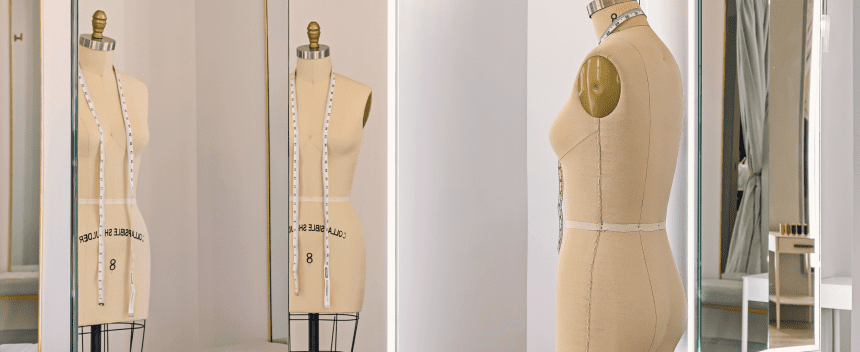
Most clothing brands design for a single, standardized mannequin that doesn’t exist in the real world. A size 8, a medium – these sizes are statistical averages, and as a result they don’t fit most people.
When you buy off-the-rack, you’re often settling for a fit engineered for someone else’s proportions. Tailoring bridges that gap, transforming a generic garment into one that honors your needs.
Why Standard Sizing Falls Short
The ready-to-wear industry operates on a system of standardized measurements that hasn’t fundamentally changed since the mid-20th century, when the US conducted the first large-scale body measurement study to produce military uniforms at scale. That research, conducted on a narrow demographic, became the foundation for the sizing systems most brands still use today.
Here’s how this “standardized fit” tends to present fit issues, and what a tailor can do to fix it.
Shoulder seam sits off-center
-
Why It Happens: Brands cut symmetrically; most people’s shoulders are wider or narrower
-
What a Tailor Can Do: Refit the shoulder, even adjust each shoulder individually for balance
Waist gaps on trousers or skirts
-
Why It Happens: Waist-to-hip ratios vary widely between individuals
-
What a Tailor Can Do: Take in or let out the waist to your comfort
Jacket pulls across theback
-
Why It Happens: Back width is rarely proportional to chest size in standard cuts
-
What a Tailor Can Do: Adjust back and/or side seams
Sleeves too long or short
-
Why It Happens: Arm length varies widely from person to person
-
What a Tailor Can Do: Shorten the sleeve from the cuff or shoulder, depending on the garment construction
Hemlines that don’t work for your height
-
Why It Happens: Patterns are drafted for an assumed height, usually around 5’6″
-
What a Tailor Can Do: Hem to your specific proportions, preferences, and shoe height

The Benefits of a Tailored Fit
Natural asymmetry is something ready-to-wear never accounts for. Most people have measurable differences between the left and right sides of their body: one shoulder slightly higher, one arm marginally longer.
Standard garments are cut identically on both sides, which means fabric pulls or pools on the side that doesn’t match the pattern. A tailor adjusts each side individually, creating a balanced result a symmetrical pattern never could.
Body contouring through darts changes the entire silhouette of a piece. Darts are triangular folds of fabric sewn into a garment to remove excess material at the bust or waist, shaping the fabric to follow your specific contours rather than hang away from them.
Hems are one of the most impactful (and often cost effective) alterations you can do. An intentional hem length makes a huge difference in the silhouette of your entire look.
Is It Worth Tailoring Off-the-Rack Clothing?
Almost always yes, with one caveat.
The best candidate for tailoring is a garment that fits well in its most complex areas, typically the shoulders on a jacket or the hips on a trouser, and needs refinement elsewhere.
Taking in a waist, shortening a hem, or adjusting a sleeve are all relatively straightforward. Restructuring a shoulder or significantly resizing a garment is more involved, and at a certain point it makes more sense to find a better starting size.
A useful rule of thumb: if you love the fabric and the general silhouette but the fit is holding it back, bring it in for a quote.
The Long-Term Case for Alterations
When a garment truly fits your body, you carry yourself differently and reach for those pieces consistently. A well-tailored wardrobe means getting real use out of what you already own, instead of buying more.
As we explore in our piece on the hidden cost of clothes that don’t fit, the garments you never wear are costing you money.
At Alts, we work across the full range, from a simple hem on a pair of jeans to a complete jacket refit on a designer piece. Whatever the starting point, the goal is always the same: a garment that works for your body, not someone else’s idea of one.
