


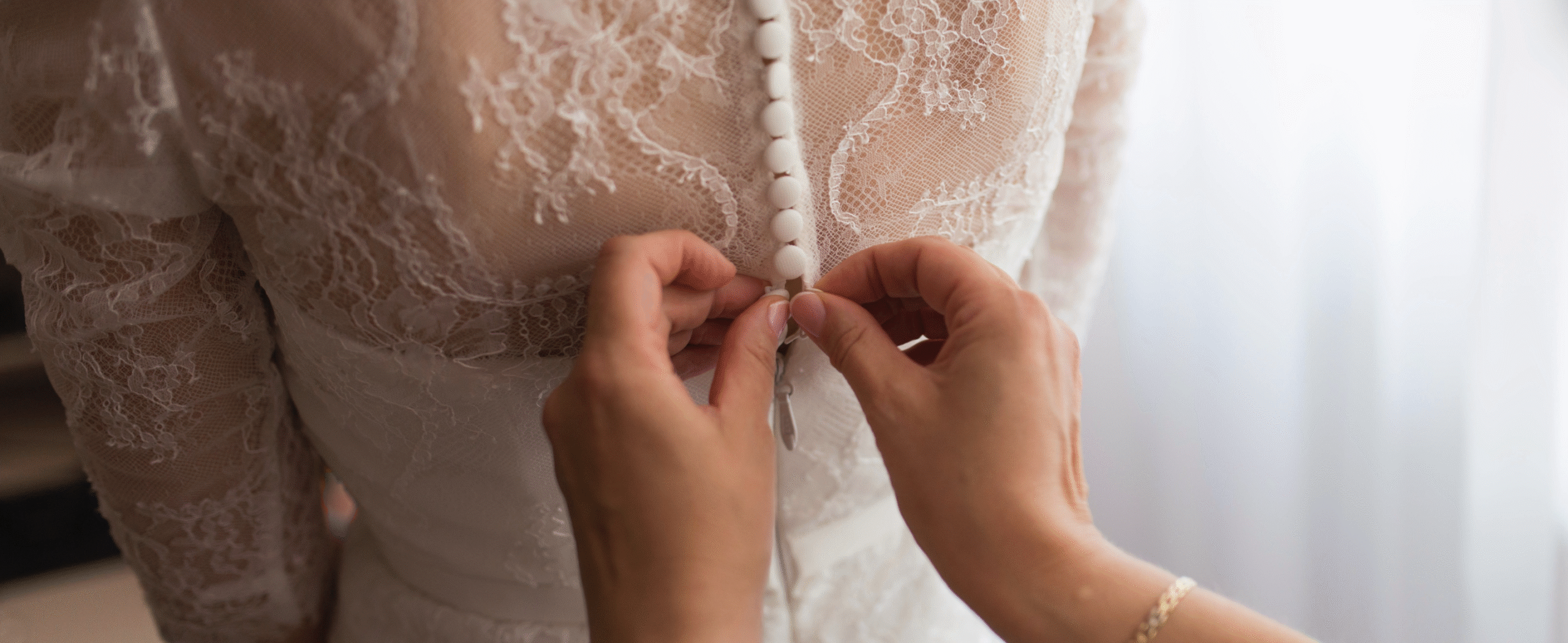
The dress you said yes to and the dress you walk down the aisle in don’t have to be exactly the same.
Most brides don’t realize how much is possible between the boutique and the wedding day. A neckline can be reshaped, a ball gown can become a fit-and-flare, and a zip closure can be replaced with a corset back.
Alts fits more than 1,000 brides per year across 17 studios in NYC and the Tri-State area. Our master seamstresses average 20+ years of experience across every fabric and construction type. What follows is what they’d recommend every bride consider—whether you’re still searching for the dress or already thinking about how to make it your own.
9 Style Transformations Worth Knowing About
- Add or Change the Sleeves: A strapless gown can become off-the-shoulder, long-sleeved, or softly draped. Detachable sleeves are also an option, giving you one look for the ceremony and another for the reception. Sleeve additions are among the most-requested transformations and can shift the entire mood of a gown, from minimalist to romantic, from modern to vintage.
- Modify the Neckline: A straight-across neckline can be reshaped into a sweetheart or V-neck. A high neckline can be lowered and vice versa. Neckline changes are among the more complex alterations and are not easily reversible, which is worth knowing before committing.
- Convert a Ball Gown Into a Fit-and-Flare: A skilled tailor can remove layers of tulle and crinoline, restructure the internal framework, and reshape the waistline into a cleaner, more streamlined silhouette. Particularly well-suited to outdoor weddings or venues where ease of movement matters.
- Create a Detachable Train: A full cathedral train can be made detachable, giving the bride two distinct looks without changing gowns. One silhouette for the ceremony, a completely different one for the reception.
- Add a Corset Back: Replacing a zip closure with a lace-up corset back solves fit issues across a range of body changes while adding a romantic, editorial detail. Particularly useful when a dress was ordered by size, and the bodice doesn’t sit quite right.
- Reconstruct a Vintage or Heirloom Gown: Silhouettes can be updated, outdated details replaced, and the overall construction modernized, while preserving the original fabric and the sentiment that comes with it. This work requires a tailor experienced in advanced construction techniques and delicate materials.
- Add Embellishment or Color: Lace appliqués, beading, or subtle colored accents like a pastel lining or embroidered floral trim can personalize a simpler gown. This works especially well on satin or crepe with clean, unadorned surfaces.
- Combine Two Dresses Into One: A bodice from one gown, a skirt from another. Less common, but entirely achievable by an expert seamstress. The result is a single bespoke piece built from two separate starting points.
- Add Built-In Bra Support: Even well-structured strapless gowns can benefit from additional support, particularly for brides who want extra lift or coverage throughout a long day. A seamstress can sew cups or a modesty panel directly into the bodice, giving you the confidence to move freely without worrying about what you’re wearing underneath.
5 Fit Adjustments That Make the Biggest Difference

- Taking in or Letting Out the Bodice: Off-the-rack and even made-to-measure gowns rarely account for the specific proportions of every bride’s torso. Taking in the bodice creates clean, smooth lines through the chest and waist. Letting it out gives room without distorting the seams or the overall shape of the dress.
- Hemming and Length: The most common alteration, and one where technique matters. For gowns with heavy beading or detailed hem work, hemming from the waist rather than the hem preserves the original design while achieving the correct length.
- Strap Adjustment: Slipping straps or straps that sit too wide are a small fix with a significant effect on how the dress sits and moves throughout the day. Getting this right early prevents constant adjustment later.
- Adding a Waist Stay: An internal fabric band sewn inside the gown takes the strain off the shoulders and keeps a heavy dress in place. Invisible from the outside and one of the most practical additions a seamstress can make, particularly for strapless styles.
- Bustle Creation: Essential for any gown with a train. The three main styles are the American bustle, where the train loops over the back; the French bustle, where folds tuck underneath; and the Austrian bustle, which creates a draped, layered effect through multiple loops. The right style depends on fabric weight and train length, and your seamstress will recommend based on your specific gown.
Can a Wedding Dress Be Repurposed After the Wedding?
Yes, and more creatively than most brides expect.
A gown can be shortened into a cocktail dress for future wear; fabric trimmings from the hem can become a ring bearer pillow, a garter, or a framed keepsake. A full reconstruction can turn a grandmother’s gown into a veil, a bolero, nightwear, or the foundation for something entirely new.
The same expertise required for bridal alterations applies here. The fabric is precious, and the work should be handled by someone who knows how to treat it that way.
Every alteration at Alts is handled by a bridal seamstress with 20+ years of experience, backed by our 30-day guarantee. With 17 studios across Manhattan, Brooklyn, New Jersey, Connecticut, and Long Island, there’s a location close to you. Book a bridal consultation and bring your questions. We’ll tell you exactly what’s possible.

